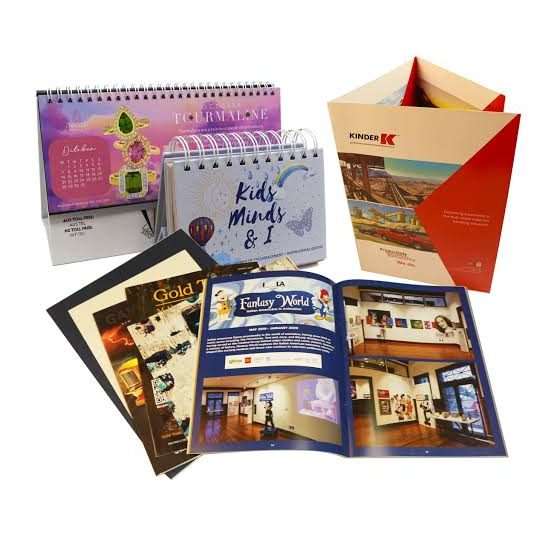

Digital marketing transformed how businesses communicate.
Today businesses can launch campaigns in minutes.
Social media ads reach thousands.
Search ads appear instantly.
Videos spread quickly.
And analytics measure almost everything.
Yet despite all of this, something unexpected continues to happen across Kenya:
Businesses still print.
Businesses still distribute brochures.
Businesses still invest in signage.
Businesses still hand out branded materials.
Businesses still create company profiles.
And many continue getting results.
Why?
Because customers may live online—but they still make decisions in the real world.
They walk into offices.
They receive proposals.
They attend exhibitions.
They interact with packaging.
They notice signage.
They hold brochures.
Digital creates reach.
Print creates presence.
At Creonix Visuals, we have seen businesses increase visibility, strengthen trust, and create stronger customer experiences by treating printed materials as strategic business assets—not outdated marketing tools.
This article explores why printed marketing continues outperforming digital advertising in important ways and how Kenyan businesses can use both channels more effectively.
The Myth That Digital Replaced Print
One of the biggest misconceptions in marketing is the belief that digital eliminated print.
It did not.
What actually happened:
Marketing became multi-channel.
Digital changed discovery.
Print strengthened credibility.
Customers rarely buy because of one interaction.
Instead, they move through multiple touchpoints.
Example:
Customer sees:
- Instagram ad
- Website
- Company profile
- Office signage
- Proposal
- Packaging
The sale happens through the combination.
Print remains one of the strongest trust-building stages in that journey.
The Problem With Digital Ads: Visibility Is Not Always Attention
Many businesses confuse impressions with impact.
Your advertisement may appear:
50,000 times.
But how many people truly noticed it?
Digital environments are crowded.
Consumers scroll quickly.
Skip quickly.
Forget quickly.
Printed materials operate differently.
They create intentional interaction.
Customers stop.
Look.
Hold.
Read.
Keep.
That changes outcomes.
Why Printed Marketing Still Performs Exceptionally Well in Kenya
Kenyan businesses operate in an environment where trust matters.
People still ask:
Who are you?
Where are you located?
Can I trust this business?
Printed materials help answer those questions.
This is particularly important for:
- SMEs
- Corporate service providers
- Real estate
- Healthcare
- Education
- Hospitality
- Events
- Manufacturing
Print strengthens legitimacy.
Print Creates Something Digital Cannot: Physical Ownership
Digital content is borrowed attention.
Print creates ownership.
When customers receive:
- Company profiles
- Branded notebooks
- Product catalogues
- Packaging
- Event kits
they physically carry your brand.
That changes memory.
People tend to remember what they physically interact with.
That is why print remains powerful.
Trust Is Still the Most Valuable Marketing Currency
Customers buy from businesses they trust.
Trust reduces:
- Customer hesitation
- Sales cycles
- Objections
- Price sensitivity
Professional print accelerates trust.
Examples:
Premium Company Profiles
Signal professionalism.
Branded Proposals
Increase credibility.
Quality Packaging
Increase perceived value.
Professional Signage
Build legitimacy.
Printed materials often become silent salespeople.
Why Print Marketing Often Delivers Better Long-Term ROI Than Ads
Digital campaigns usually stop producing results after spend ends.
Print often continues.
Examples:
Brochure
Shared internally.
Referenced repeatedly.
Signage
Visible daily.
Packaging
Creates repeated exposure.
Merchandise
Remains with customers.
Print continues working.
That creates compounding returns.
The Hidden Advantage: Print Filters for More Intentional Attention
Digital users behave passively.
Printed users behave actively.
They choose to:
Pick up.
Read.
Keep.
Return.
This creates stronger engagement.
That engagement improves:
- Recall
- Understanding
- Decision confidence
Why Printed Materials Improve Brand Recall More Than Digital Ads
Customers remember experiences.
Print creates multi-sensory interaction.
Customers notice:
- Texture
- Weight
- Finishing
- Packaging
- Presentation
These details influence memory.
Businesses that ignore physical experiences miss opportunities.
The Printed Marketing Materials Delivering the Best Results in Kenya
1. Company Profiles
Still one of the strongest sales assets.
Perfect for:
- Corporate sales
- Tender applications
- Partnerships
Benefits:
✓ Builds authority
✓ Supports meetings
✓ Improves conversion
2. Brochures
Excellent for:
- Service businesses
- Product showcases
- Exhibitions
Benefits:
✓ Education
✓ Better understanding
✓ Stronger inquiries
3. Flyers
Effective for:
- Promotions
- Local campaigns
- Activations
Benefits:
✓ Reach
✓ Awareness
4. Signage
Powerful because it never switches off.
Benefits:
✓ Continuous visibility
✓ Local authority
5. Packaging
Transforms customer experience.
Benefits:
✓ Higher perceived value
✓ Repeat exposure
6. Promotional Merchandise
Builds long-term recall.
Benefits:
✓ Customer retention
✓ Brand exposure
Why Businesses Should Stop Comparing Print and Digital
This comparison misses the point.
The strongest businesses combine both.
Example strategy:
Digital Ad → Website → Printed Company Profile → Proposal → Sale
Or:
Social Media → Event → Merchandise → Follow-Up → Repeat Business
The channels support each other.
Signs Your Business Is Too Dependent on Digital Ads
You may need stronger print support if:
- Ad costs keep increasing
- Customers forget your business
- Conversion remains low
- Sales meetings feel weak
- Your materials feel generic
- Customers ask for more information after calls
Print fills these gaps.
The New Marketing Model for Kenyan Businesses
The strongest strategy today looks like this:
Digital For:
- Discovery
- Speed
- Reach
- Retargeting
Print For:
- Trust
- Experience
- Conversion
- Retention
Businesses using both often outperform businesses relying on one.
How Creonix Visuals Helps Businesses Create Marketing That Lasts
At Creonix Visuals, printing is approached as a growth tool—not simply production.
Solutions include:
✓ Digital Printing
✓ Brochure Printing
✓ Company Profiles
✓ Large Format Printing
✓ Office Branding
✓ Vehicle Branding
✓ Packaging Support
✓ Promotional Merchandise
✓ Marketing Collateral
The goal:
Help businesses become easier to notice, easier to trust, and harder to forget.
Final Thoughts
Digital advertising changed marketing.
But it did not eliminate the value of physical brand experiences.
Printed marketing materials continue outperforming digital ads in areas that matter most:
Trust.
Recall.
Visibility.
Customer experience.
Brand perception.
The businesses creating the strongest results are not abandoning digital.
They are strengthening it with print.
Creonix Visuals helps businesses turn printed materials into measurable business growth.
FREQUENTLY ASKED QUESTIONS
1. Does print marketing still work in Kenya?
Yes. Print remains effective because it improves visibility and trust.
2. Is print better than digital ads?
Each serves different purposes. Combined strategies often perform best.
3. What printed materials generate the strongest ROI?
Company profiles, brochures, signage, packaging, and merchandise.
4. Why do customers trust printed materials?
Physical presentation often increases credibility.
5. Can print increase conversion?
Yes. Better presentation improves decision confidence.
6. Are brochures still effective?
Absolutely, especially in B2B and events.
7. Does signage count as marketing?
Yes. It provides ongoing visibility.
8. Can print support digital campaigns?
Yes. Print often increases recall and engagement.
9. Is print suitable for small businesses?
Yes. Strategic print investments can outperform larger ad budgets.
10. What is the biggest mistake businesses make?
Relying entirely on digital visibility.
11. Does packaging influence marketing?
Packaging shapes customer experience and perceived value.
12. Why combine print and digital?
Together they improve discovery, trust, and conversion.